

This summer, two of our leaders — Dr. Holly E. Richter, Secretary of the WFF Board of Directors, and Dr. Itengre Ouedraogo, Founder & CEO of ARENA in Burkina Faso — took the global stage to spotlight critical issues in maternal health, particularly around obstetric fistula prevention, treatment, and recovery. Their contributions reflect our leadership’s deep commitment to advancing high-quality care for women worldwide and ensuring that no woman is left behind.
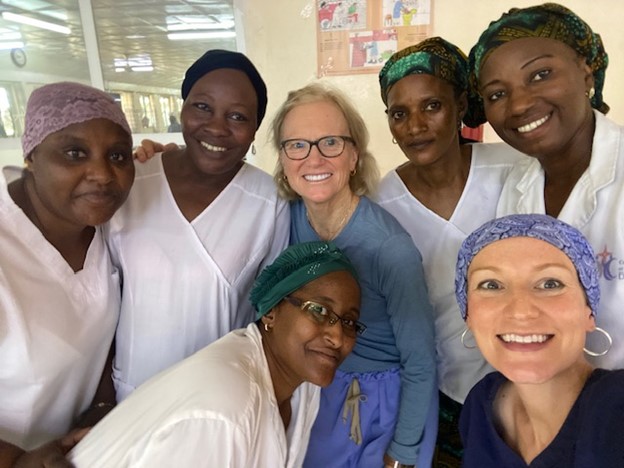
Dr. Holly E. Richter, center, with the Danja Team, 2024
Dr. Holly E. Richter at the IUGA/EUGA Joint Meeting in Barcelona
At the joint IUGA/EUGA Meeting in Barcelona in June, Dr. Richter delivered a powerful discussion on urinary incontinence following obstetric fistula repair. Drawing from decades of clinical and research experience, Dr. Richter emphasized:
- The global burden of obstetric fistula, with over 500,000 women affected worldwide, 95% of whom are in sub-Saharan Africa.
- The complex pathophysiology of residual urinary incontinence post-repair, including anatomical, surgical, and neurological factors.
- The urgent need for standardized definitions, clinical protocols, and long-term outcome tracking to improve care.
Importantly, she offered a vision for the future: collaborative international research, innovation in treatment, and the development of evidence-based clinical guidelines. Dr. Richter’s work continues to shape the field of urogynecology and elevate the standard of care for women recovering from childbirth injuries.
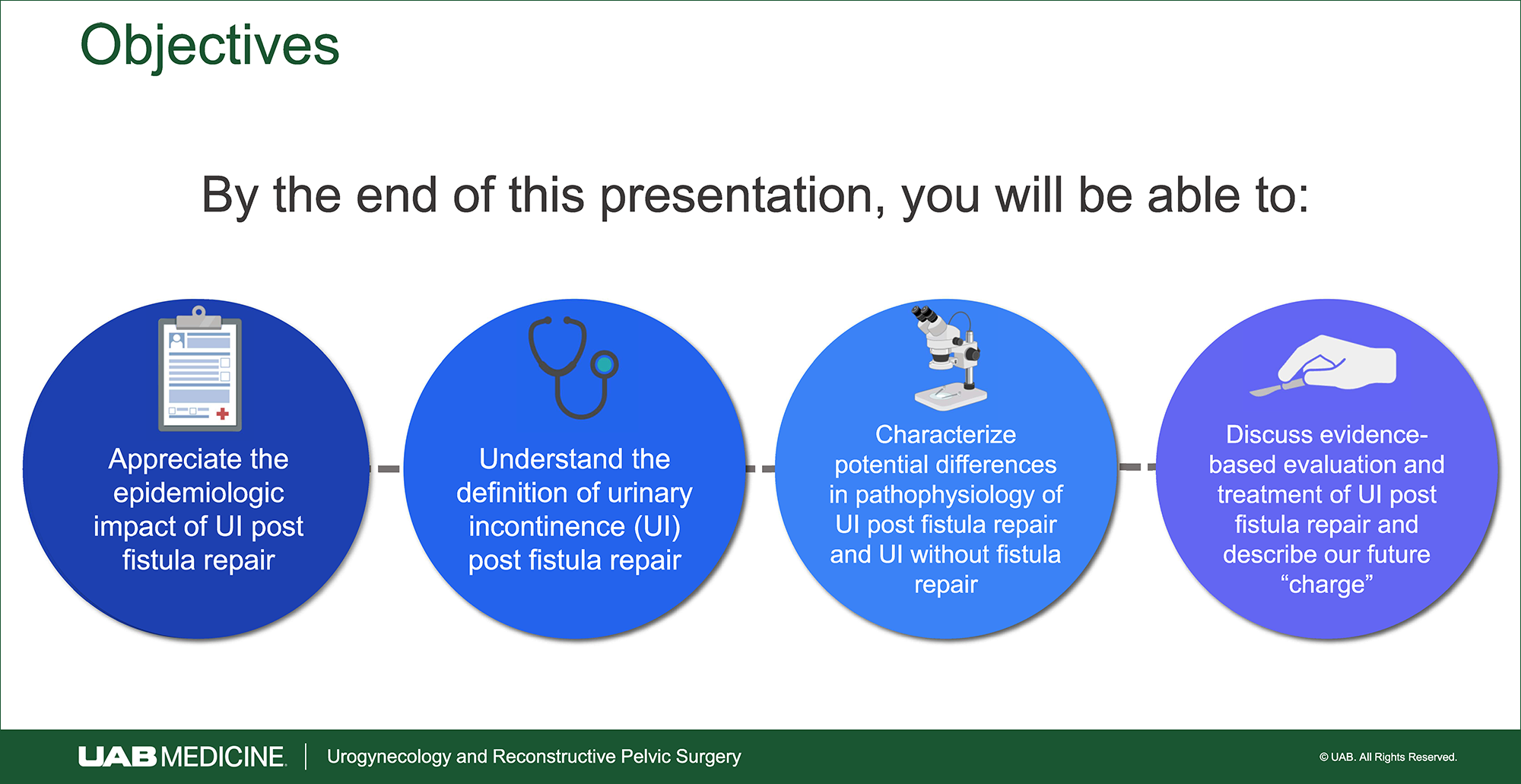
Dr. Holly E. Richter, UAB Medicine, June 18, 2025
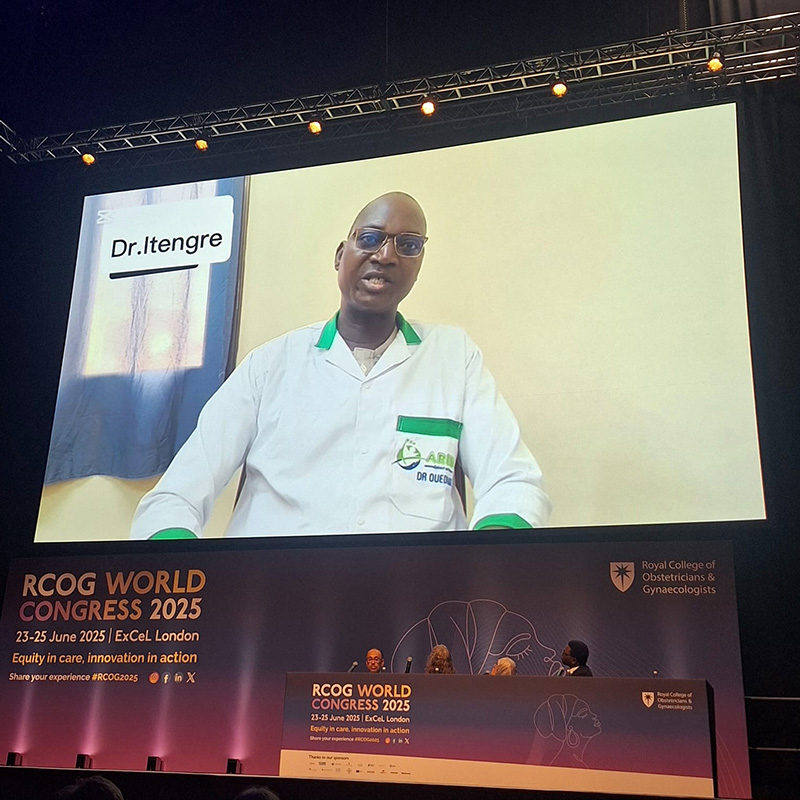 Dr. Itengre Ouedraogo at the RCOG World Congress 2025
Meanwhile, at the Royal College of Obstetricians and Gynaecologists (RCOG) World Congress in London, Dr. Itengre Ouedraogo joined a distinguished panel virtually on obstetric fistula, chaired by Professor Hassan Shehata, Global Health VP, RCOG. In his plenary remarks, Dr. Ouedraogo addressed the challenges of prevention and treatment in low- and middle-income countries (LMICs), highlighting:
- The three types of delays that contribute to fistula development: delays in seeking care, reaching care, and receiving quality care.
- The ongoing barriers women face even after developing fistula—stigma, isolation, and limited access to specialized treatment.
- Key strategies for progress, including:
- Community mobilization
- Midwife training
- Improved access to emergency obstetric care
- Use of AI in maternal health
- Holistic, integrated care at specialized centers
Dr. Ouedraogo’s insights underscore the importance of addressing both the medical and social dimensions of maternal health to end fistula and other preventable childbirth injuries.
Join Us in Supporting Maternal Health
Together, we can transform maternal health outcomes and ensure that every woman receives the care and dignity she deserves.