
Maimouna
Burkina Faso
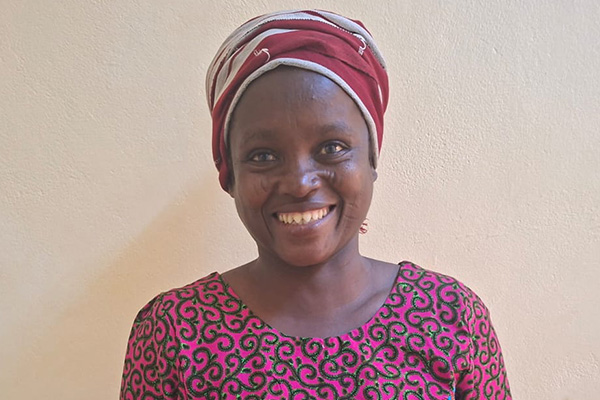 In regions torn by conflict and instability, access to maternal healthcare becomes a distant hope. For women like Maimouna, a 35-year-old mother from Tambouga in eastern Burkina Faso, this lack of access can lead to devastating consequences. Her story demonstrates why maternal health services must reach even the most remote and insecure areas.
Due to escalating political insecurity, many health facilities near Maimouna’s village were closed. Like many others, she had no choice but to attempt a home birth with the help of a traditional birth attendant. After three days of labor, complications arose. With no reliable transportation, she was taken 65 km away on a motorcycle to the nearest hospital.
There, she underwent a cesarean section. Tragically, both of her twin babies were stillborn. Worse still, she awoke to discover she had suffered a bladder injury — and she was now incontinent. Though she remained in the hospital for a week, she was discharged without treatment for her injury and told her leg pain would resolve on its own. It didn’t.
Over the next two years, Maimouna was passed from hospital to hospital. She was told there was no cure. Her husband gave up seeking care, and she resigned herself to a life of isolation and shame. “I sometimes said I would rather die than live with this,” she shared.
Then, one of her children heard about ARENA Medical Center. After traveling 350 km to Ouagadougou, Maimouna was welcomed with compassion and dignity.
The doctor told me my injury was complicated, but they would do their best. Now I can go by myself to empty my bladder. It’s like a miracle.
Maimouna’s story is not unique. In war-torn and politically unstable regions, thousands of women suffer childbirth injuries without access to care. Your support helps organizations like ARENA and Worldwide Fistula Fund reach women like Maimouna with life-changing treatment.